Port-Based QoS vs 802.1p/DSCP QoS: What’s the Difference?
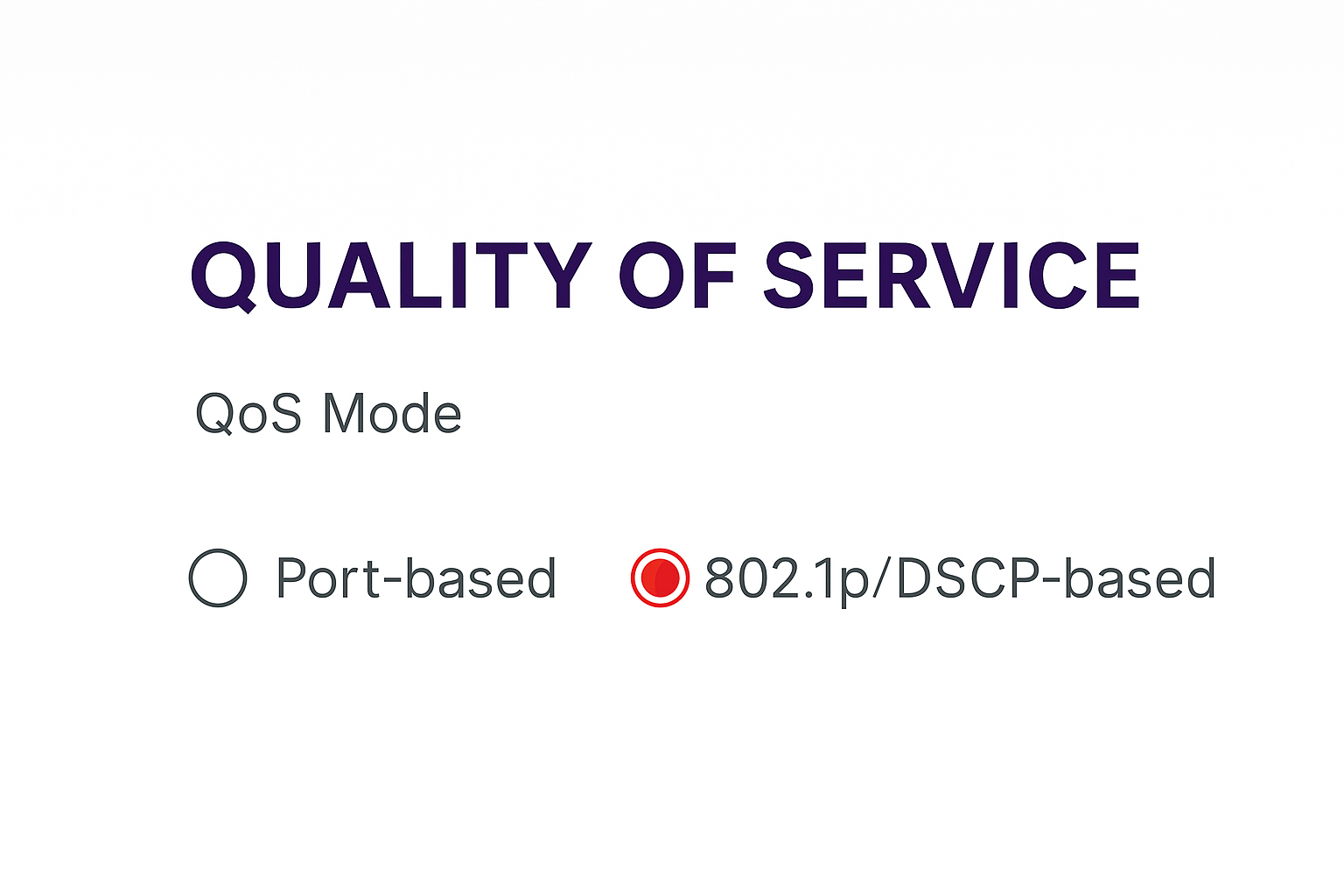
If you’re new to networking, you’ve probably seen QoS settings like Port-based QoS and 802.1p/DSCP-based QoS on your router or switch. But what do these terms actually mean? And which one should you use?
This guide breaks down both QoS modes in simple language and provides real-world examples to help you choose the right option for your home network, business, or lab environment.
What Is QoS (Quality of Service)?
QoS is a networking feature that prioritizes important traffic so your most critical applications—like VoIP calls, video conferencing, or security cameras—run smoothly even when your network is busy.
Port-Based QoS Explained (Simple Definition)
Port-based QoS prioritizes traffic based on which physical port a device is plugged into. It does not analyze the type of traffic.
Benefits of Port-Based QoS
- Easy to configure
- Great for small networks
- Works well when specific devices need priority
Port-Based QoS Examples
1. Prioritizing a Printer Assign the printer’s port a higher priority so print jobs never lag.
2. Ensuring POS Terminal Stability Retail stores use port-based QoS to keep payment systems responsive.
3. Improving Server Management Access Assigning priority to a server’s management port ensures smooth remote access.
What Is 802.1p/DSCP QoS? (Beginner-Friendly Definition)
802.1p and DSCP are tagging systems that classify traffic based on type, not port. This is the preferred method for modern networks.
Benefits of 802.1p/DSCP QoS
- More accurate prioritization
- Ideal for VoIP, video, and real-time apps
- Works across VLANs and shared ports
802.1p/DSCP QoS Examples
1. VoIP Call Quality Voice packets get high priority to prevent call drops.
2. Security Camera Video Streams Cameras receive consistent bandwidth for smooth recording.
3. Work-From-Home Optimization Zoom, Teams, VPN, and RDP traffic get priority over downloads.
Port-Based vs 802.1p/DSCP QoS: Which Should You Use?
| Best For | Recommended Mode |
|---|---|
| Simple networks | Port-based QoS |
| VoIP and video | 802.1p/DSCP |
| Mixed traffic types | 802.1p/DSCP |
| Quick setup | Port-based QoS |
Final Thoughts
If you want the simplest setup, choose Port-based QoS. If you want the best performance and flexibility, choose 802.1p/DSCP QoS.
Both modes can dramatically improve your network performance when used correctly.
Port-Based QoS vs 802.1p/DSCP QoS: What’s the Difference? (Beginner-Friendly Guide)
If you’re new to networking, you’ve probably seen QoS settings like Port-based QoS and 802.1p/DSCP-based QoS on your router or switch. But what do these terms actually mean? And which one should you use?
This guide breaks down both QoS modes in simple language and provides real-world examples to help you choose the right option for your home network, business, or lab environment.
What Is QoS (Quality of Service)?
QoS is a networking feature that prioritizes important traffic so your most critical applications—like VoIP calls, video conferencing, or security cameras—run smoothly even when your network is busy.
Port-Based QoS Explained (Simple Definition)
Port-based QoS prioritizes traffic based on which physical port a device is plugged into. It does not analyze the type of traffic.
Benefits of Port-Based QoS
- Easy to configure
- Great for small networks
- Works well when specific devices need priority
Port-Based QoS Examples
1. Prioritizing a Printer Assign the printer’s port a higher priority so print jobs never lag.
2. Ensuring POS Terminal Stability Retail stores use port-based QoS to keep payment systems responsive.
3. Improving Server Management Access Assigning priority to a server’s management port ensures smooth remote access.
What Is 802.1p/DSCP QoS? (Beginner-Friendly Definition)
802.1p and DSCP are tagging systems that classify traffic based on type, not port. This is the preferred method for modern networks.
Benefits of 802.1p/DSCP QoS
- More accurate prioritization
- Ideal for VoIP, video, and real-time apps
- Works across VLANs and shared ports
802.1p/DSCP QoS Examples
1. VoIP Call Quality Voice packets get high priority to prevent call drops.
2. Security Camera Video Streams Cameras receive consistent bandwidth for smooth recording.
3. Work-From-Home Optimization Zoom, Teams, VPN, and RDP traffic get priority over downloads.
Port-Based vs 802.1p/DSCP QoS: Which Should You Use?
| Best For | Recommended Mode |
|---|---|
| Simple networks | Port-based QoS |
| VoIP and video | 802.1p/DSCP |
| Mixed traffic types | 802.1p/DSCP |
| Quick setup | Port-based QoS |
Final Thoughts
If you want the simplest setup, choose Port-based QoS. If you want the best performance and flexibility, choose 802.1p/DSCP QoS.
Both modes can dramatically improve your network performance when used correctly.